

Build the receiving record from the agreed order
A dealer receiving a mower shipment needs a reference that is more precise than a product-family name. Before arrival, put the agreed order description, model identifiers, configurations, optional equipment and document list into a receiving record. Give each expected unit or package a row and identify the person who will compare it with the delivery. If any detail is still being discussed, mark it as open rather than quietly treating a quotation, catalogue image or earlier sample as the final specification. This makes the receiving check a comparison against an agreed scope instead of an improvised visual judgment.
The public product range can help the team recognize the categories involved, but it is not a substitute for the particular order record. Ask the supplier which identifiers should appear on each unit and which documents correspond to the ordered configuration. If the buyer has selected several variants, prepare separate rows for them rather than merging all machines into one line. The purpose of this preparation is to make discrepancies visible when there is still a chance to ask a focused question before the machine moves onward to a customer site.
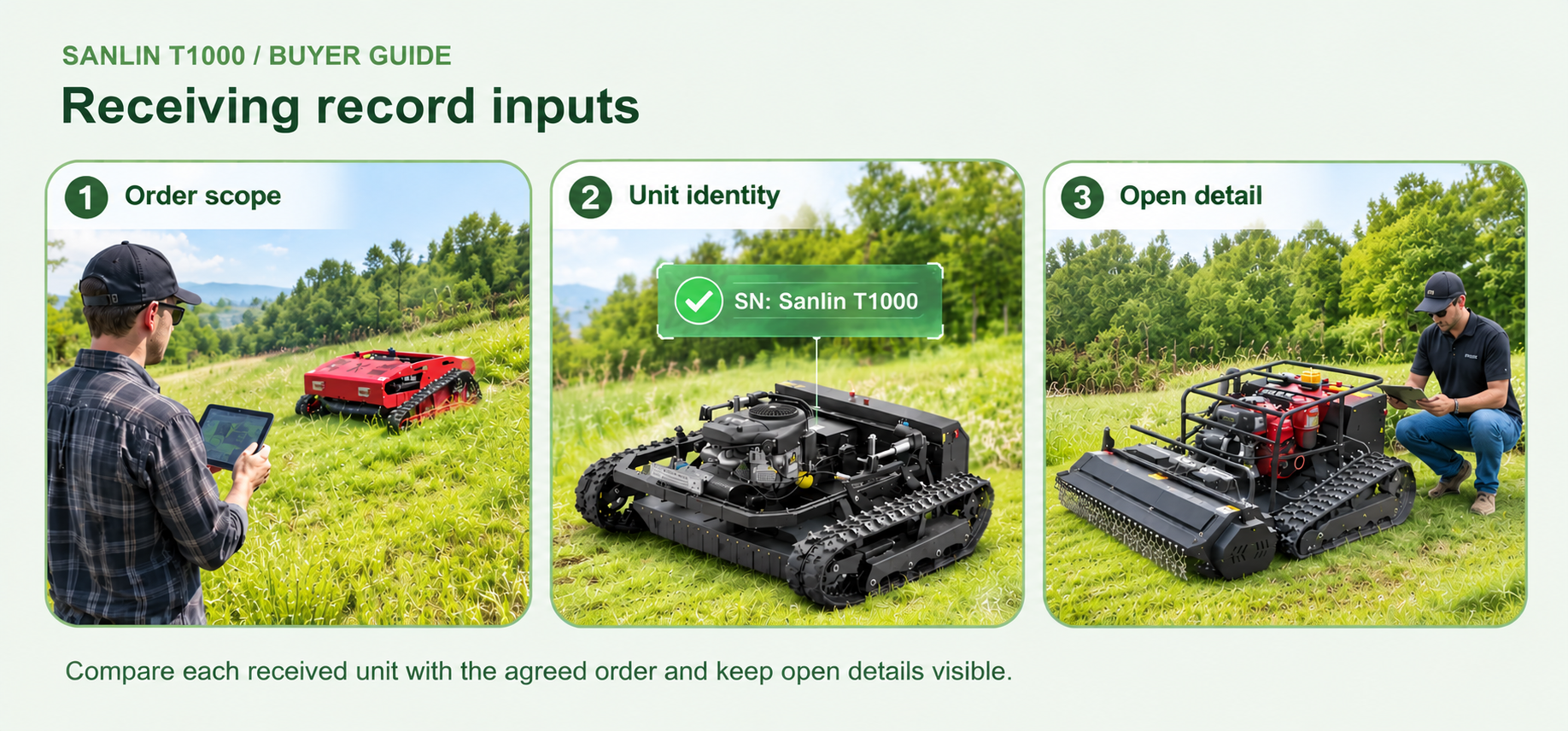
Compare each received unit with the agreed order and keep open details visible.
Check identity and visible condition without overclaiming
At receipt, count the packages and compare the available labels, unit identifiers and included items with the order record. Record visible package condition before unpacking, and follow the responsible team's handling instructions. Photograph any visible discrepancy in a way that preserves the identifier and context. A clean exterior does not prove that every component is correct or that the unit has passed an operational test. Conversely, a packaging mark alone does not identify what happened inside. Write down exactly what was observed, when it was observed and who recorded it.
Create separate statuses for matched, uncertain and exception items. A missing identifier, different attachment or document version needs a question tied to the affected unit; it should not be absorbed into a general note that the shipment looks acceptable. Ask the designated supplier contact what evidence is needed to resolve each exception, and keep the machine in the receiving process under local procedures while the answer is pending. The dealer should not promise a customer that a questioned configuration is equivalent merely because the units look similar.
Match instructions and market documents to the exact unit
Check that the operator and maintenance instructions supplied for the order can be associated with the actual received model and configuration. Record document titles or versions where available and note any missing or ambiguous item. The buyer guide on remote-control tracked mower selection emphasizes reviewing the intended application, selected configuration, destination-market documents and service plan. Use those topics as prompts for the receiving team, while leaving any formal destination-market assessment to the person responsible for that market. A certificate or mark referring to another model must not be silently assigned to this one.
If an attachment, power setup or control arrangement differs from the order, reopen the document match as well as the physical item check. Ask whether the instructions supplied still cover the delivered arrangement. The receiving team does not need to resolve a technical or regulatory question by guesswork; it needs to preserve the exact question, the affected unit and the person who can answer it. A document inventory is most valuable when it can be used later by the service team and by the customer receiving that specific unit.
Close exceptions before customer handover
Finish the receiving record with one owner and next action for each exception. Distinguish a simple count or paperwork correction from a question that changes the proposed model, configuration, operating instructions or customer commitment. Record the answer and the evidence used to close it, rather than deleting the original observation. If a question remains open, the record should say who will decide whether the unit can move to the next step under the dealer's procedures. This prevents a receiving signature from being read as approval of every unresolved detail.
Before customer handover, pass forward the final unit identity, applicable instructions, agreed accessories and any remaining restrictions or follow-up tasks. A later change of site or configuration may require another review, even if the original shipment matched the order. The useful conclusion is a traceable decision about these specific machines and documents. It is not a blanket claim that every unit in the range has the same parts, approvals or operating boundaries. The record should make the next conversation shorter and more accurate for both dealer and supplier.
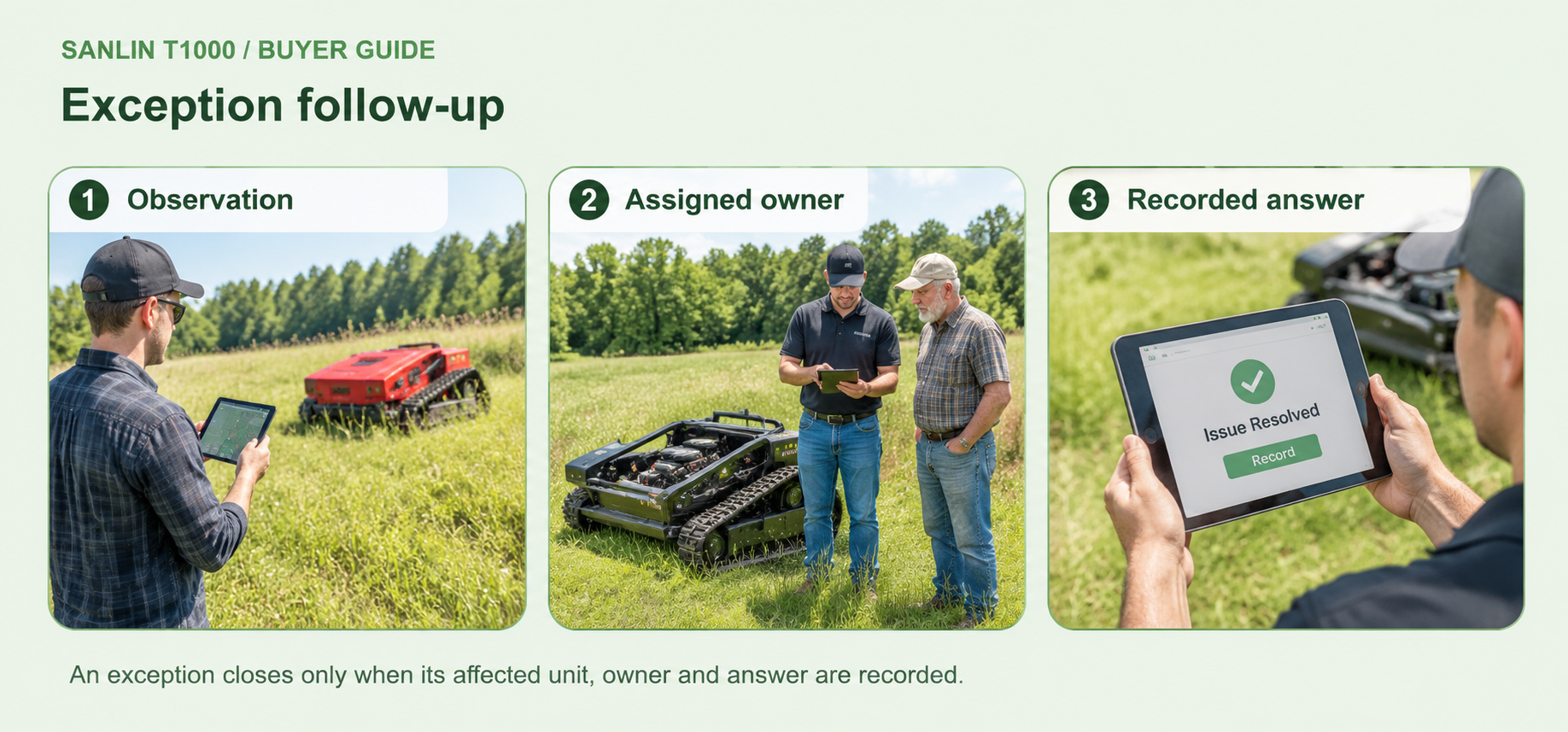
An exception closes only when its affected unit, owner and answer are recorded.
Next step for your project
Preparing a receiving plan for a mower order? Share the proposed model and configuration, destination market and the identifiers or documents your team needs to match so the open points can be discussed before handover.