
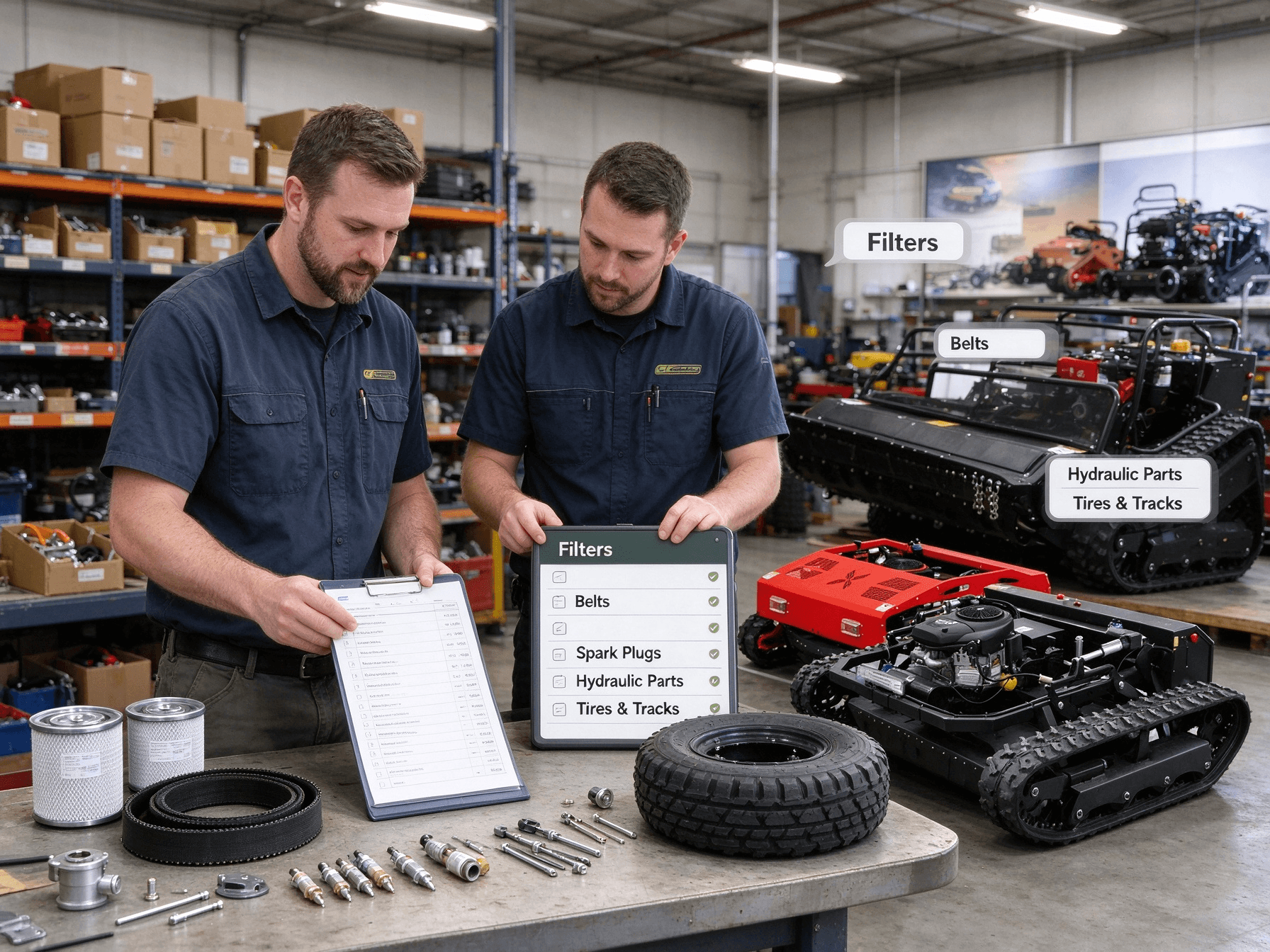
Define the machines and customers the stock must serve
An initial spare parts order should begin with a clearly bounded machine list. Record the exact proposed models, configurations and any optional equipment the dealer expects to carry. Then describe the first customer applications and likely operating patterns, without assuming that all machines in a product family share the same parts. A list assembled from a generic catalogue can look complete while missing the items needed for the actual units. Keep the model and configuration identifiers beside each candidate part so the purchasing and service teams can review the same scope.
Start with the public product range to identify which categories merit a discussion, then ask for the part identifiers relevant to the selected configuration. The product range does not by itself establish interchangeability. If the dealer has not yet chosen the model mix or the number of units, mark the stock plan provisional. That distinction matters because a launch assortment for one demonstration unit differs from a plan for several customer machines in regular work. The useful output is a short machine register, with unresolved model choices listed openly.
Separate routine items from diagnosis-dependent parts
Divide candidate stock into routine maintenance and wear items, items linked to known local service tasks, and parts that should only be selected after diagnosis. This is a planning method, not a claim about the failure rate of any Sanlin model. Ask for the maintenance instructions and the relevant identifiers for the proposed machine before assigning quantities. A dealer can then connect each item to a documented task and determine whether its own team is qualified and equipped to do that work. Items with no identified task or machine fit should remain a question rather than automatically entering the first order.
Review what the dealer can safely do in its workshop, what must be referred to a qualified technician, and what information customers need at handover. The buyer guidance on choosing a remote-control tracked mower raises maintenance, wear parts, technical information and after-sales communication as evaluation questions. Use those questions to build a service map, but confirm the actual instructions for the selected model. A stocked item has little value if staff cannot identify it, install it under the applicable instructions, or explain when it is needed.
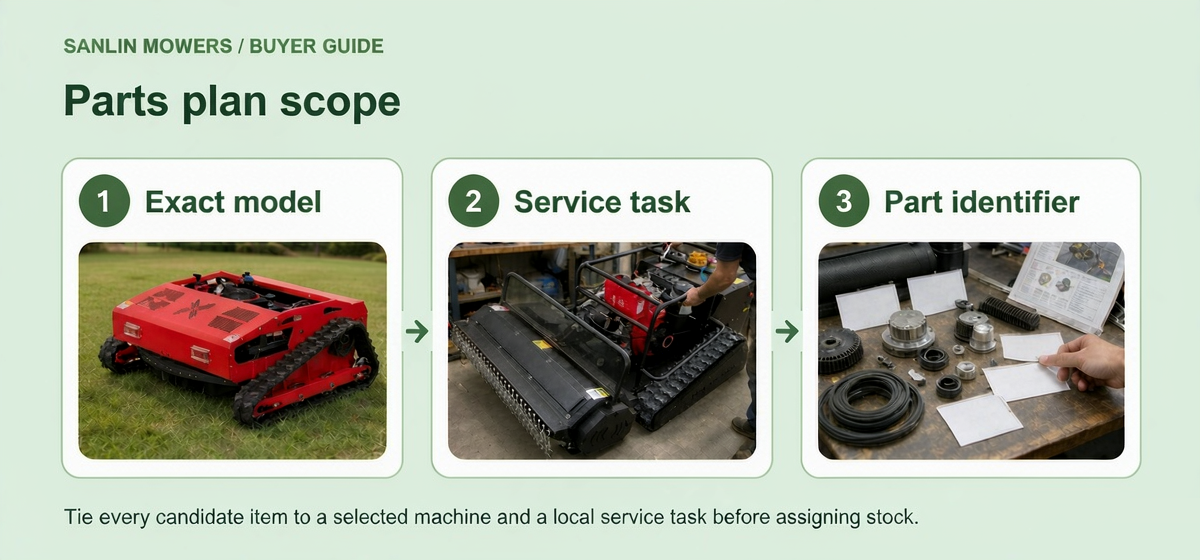
Tie every candidate item to a selected machine and a local service task before assigning stock.
Set quantities from a stated scenario, not a guess
Choose a planning horizon and write down the assumptions behind it: proposed units in local stock, expected customer units, likely operating intensity, the dealer's service scope and the time needed to request another part. Use a separate row for each part and model combination. Initial quantities should be a decision by the dealer after reviewing those inputs with the supplier; a universal stocking number would conceal too many unknowns. Where the operating pattern is uncertain, use a small reviewable starting quantity or defer the item, then revisit the list after actual service records exist.
For every proposed quantity, state what would cause it to change. A new model configuration, an additional customer location or a different maintenance plan may all alter the list. Conversely, a part that can only be chosen after inspection should not be stocked merely because it appears on a diagram. Ask how ordering, part identification and replenishment communication would work for the candidate program, while leaving lead time and availability as points to confirm. This produces a stock decision that can be revised without treating early assumptions as supplier commitments.
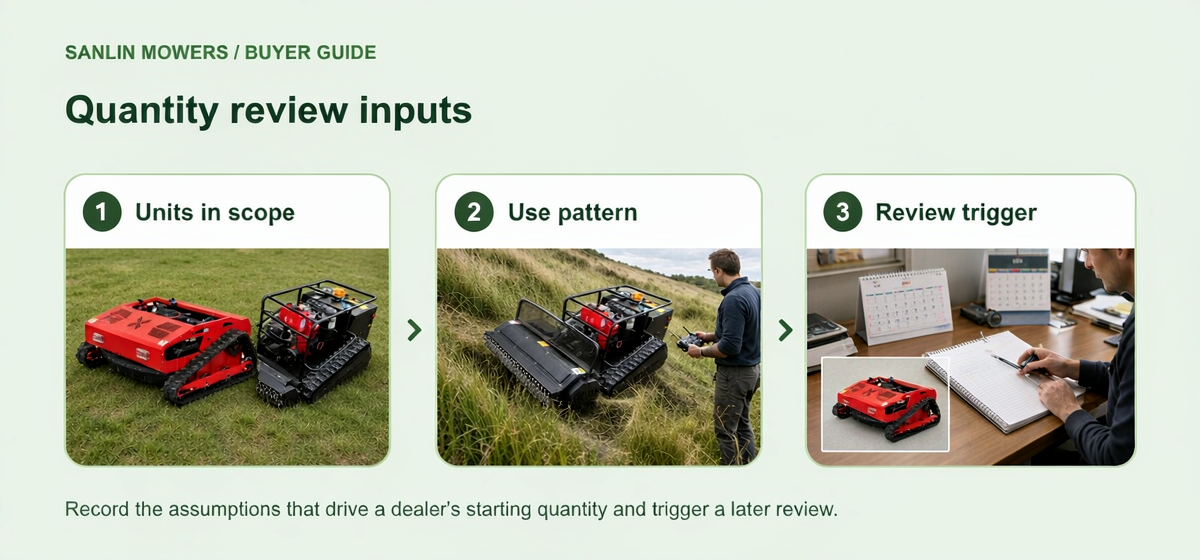
Record the assumptions that drive a dealer's starting quantity and trigger a later review.
Make the handover usable by service and sales teams
The first parts list should travel with a simple handover record. Include the model and configuration identifiers, the applicable manual version, each approved part identifier, its intended task, the local owner, the proposed quantity and any open fit or documentation question. Sales staff can use the record to avoid promising a part or service before the technical team confirms it. Service staff can use it to check whether the incoming machine matches the assumptions behind the stock. Keep an explicit status for pending items so a quotation does not silently turn them into approved stock.
Schedule a review when the first machines arrive and again after the dealer has evidence from actual use and service requests. Compare the received units with the register, correct any configuration mismatch, and record why each stock quantity remains appropriate or changes. The conclusion is a traceable initial plan for the dealer's chosen models and service capability, not a claim that one parts kit fits every mower or market. If a model or destination changes, reopen the part and document checks before repeating the order.
Next step for your project
Planning an initial spare parts stock for a selected mower range? Share the proposed models, configurations, applications and local service scope so the relevant part identifiers and open questions can be discussed for your enquiry.