
Write down the task behind the attachment request
A request for an additional mower attachment should begin with the work it is meant to change. Describe the vegetation, ground conditions, desired result, access limits and operating pattern at the site. Name the current machine or the machine being considered, and state whether the attachment is needed for one defined job or for a wider dealer range. This keeps a buyer from treating a similar-looking accessory as a universal solution. If the request comes from a customer, ask for the circumstances in which the existing configuration is insufficient, without promising that a different attachment will solve the problem.
Use the public product range to identify candidate machine categories, then make the enquiry specific to the actual model and configuration. Record what is known about the intended task and what still needs a site assessment. A broad image or product-family label is useful for starting a conversation but cannot establish fit, safe operation or an achievable finish for a particular unit. The first decision is whether there is enough application detail to ask a meaningful compatibility question. If the site or machine identity is unclear, collect that information before adding an item to the order.
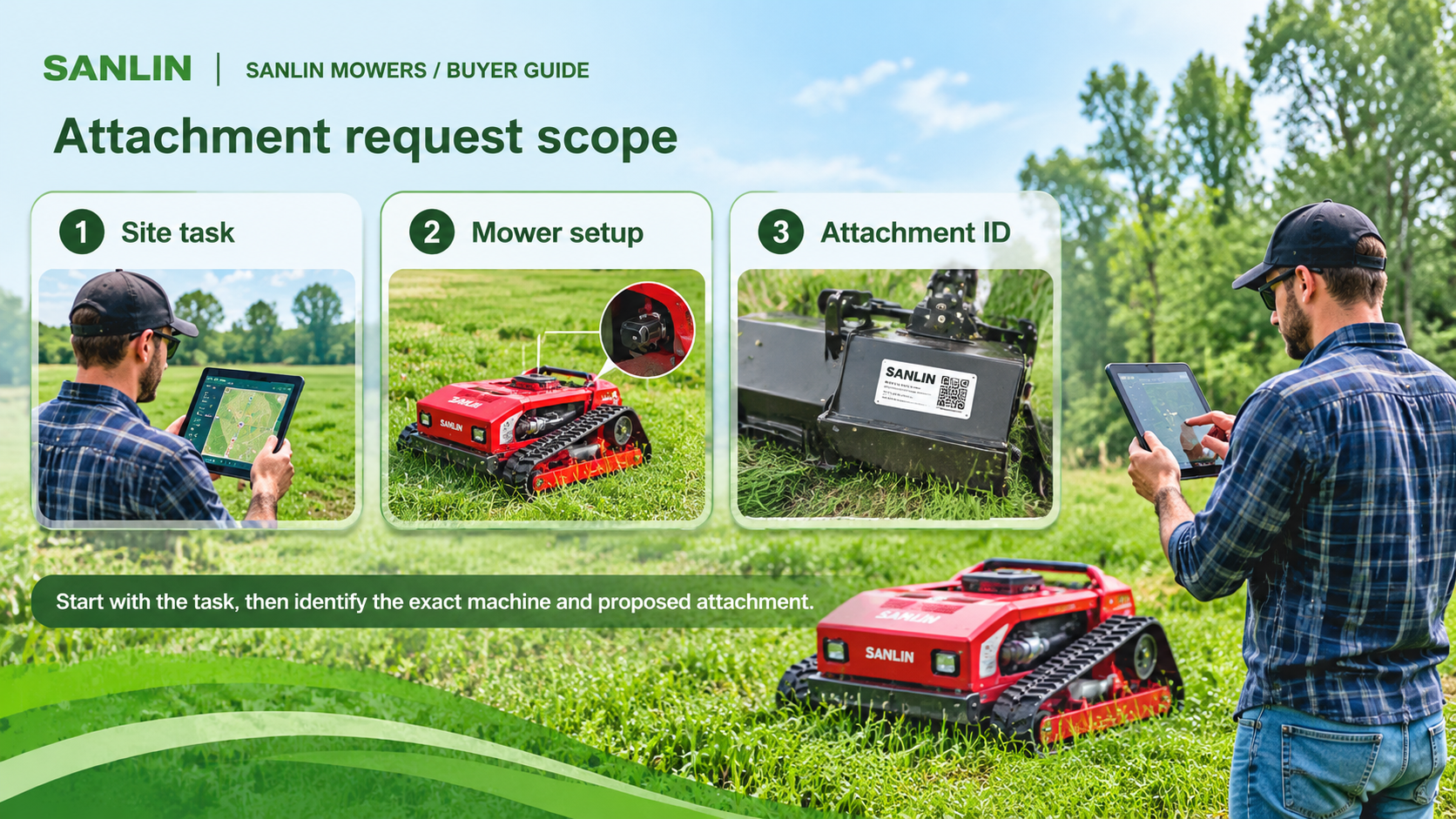
Start with the task, then identify the exact machine and proposed attachment.
Ask for an exact model and configuration match
Put the proposed mower model, version and relevant options beside the requested attachment identifier. Ask the supplier to confirm whether that specific combination is offered and which instructions apply to it. Do not infer interchangeability from appearance, a shared family name or a part photographed on another machine. If the order includes more than one mower configuration, check each combination separately. Where an answer depends on a revision or an option not yet selected, mark compatibility as pending and identify what the buyer must decide before a final quote can be evaluated.
The buyer guide on remote-control tracked mower selection recommends comparing the actual drive, power and cutting configuration with the intended work, then confirming operating boundaries for the chosen model and conditions. Apply the same discipline to an attachment. Ask what changes in setup, handling, inspection or maintenance are described in the applicable instructions. A salesperson's short description may help frame the question, but the receiving and operating teams need a document set they can associate with the delivered combination. Keep any unverified claim out of the purchasing conclusion.
Review the worksite and operating boundary again
An attachment can change how a machine is used, so revisit the site brief rather than carrying forward a previous assessment without review. The responsible site team should consider routes, obstacles, edges, visibility, bystanders, surface condition and the space needed for the proposed work. Ask which instructions address the selected combination and where they describe its boundaries. This is a prompt for a project review, not a declaration that the unit is suitable for a slope, vegetation type or customer site. Where the instructions or site information are missing, record the gap and defer that conclusion.
For a dealer, the question is also whether the customer and local service team can identify and handle the attachment correctly. Record the person responsible for receiving, fitting, routine checks and support queries. If the proposed use would require a different process or specialist service, ask for that information before the buyer promises an application to a customer. A demonstration may help answer a defined question when the responsible parties consider it appropriate, but a short demonstration cannot replace model-specific instructions or the site's own risk review.
Keep the attachment decision traceable in the order
When the attachment is ready for a commercial discussion, list the machine configuration, attachment identifier, intended task, applicable document versions and unresolved questions on the same order record. Distinguish an included item from an option still awaiting confirmation. Ask how the unit and attachment will be identified at receipt so the dealer can compare what arrives with the agreed combination. Do not let a quotation line alone stand in for evidence that every application and instruction question has been answered. If the machine or attachment changes before delivery, reopen the relevant checks.
The conclusion should be conditional and useful: which exact combination is under review, what task it is intended to support, what documentation has been matched, and which owner will resolve any remaining gap. Buyers can then compare options on a common basis without claiming an attachment fits an entire range. A clear enquiry can be revised as the job or configuration changes. It also gives sales, service and receiving teams a shared record for their next step, while leaving final site and operational decisions with the responsible people.
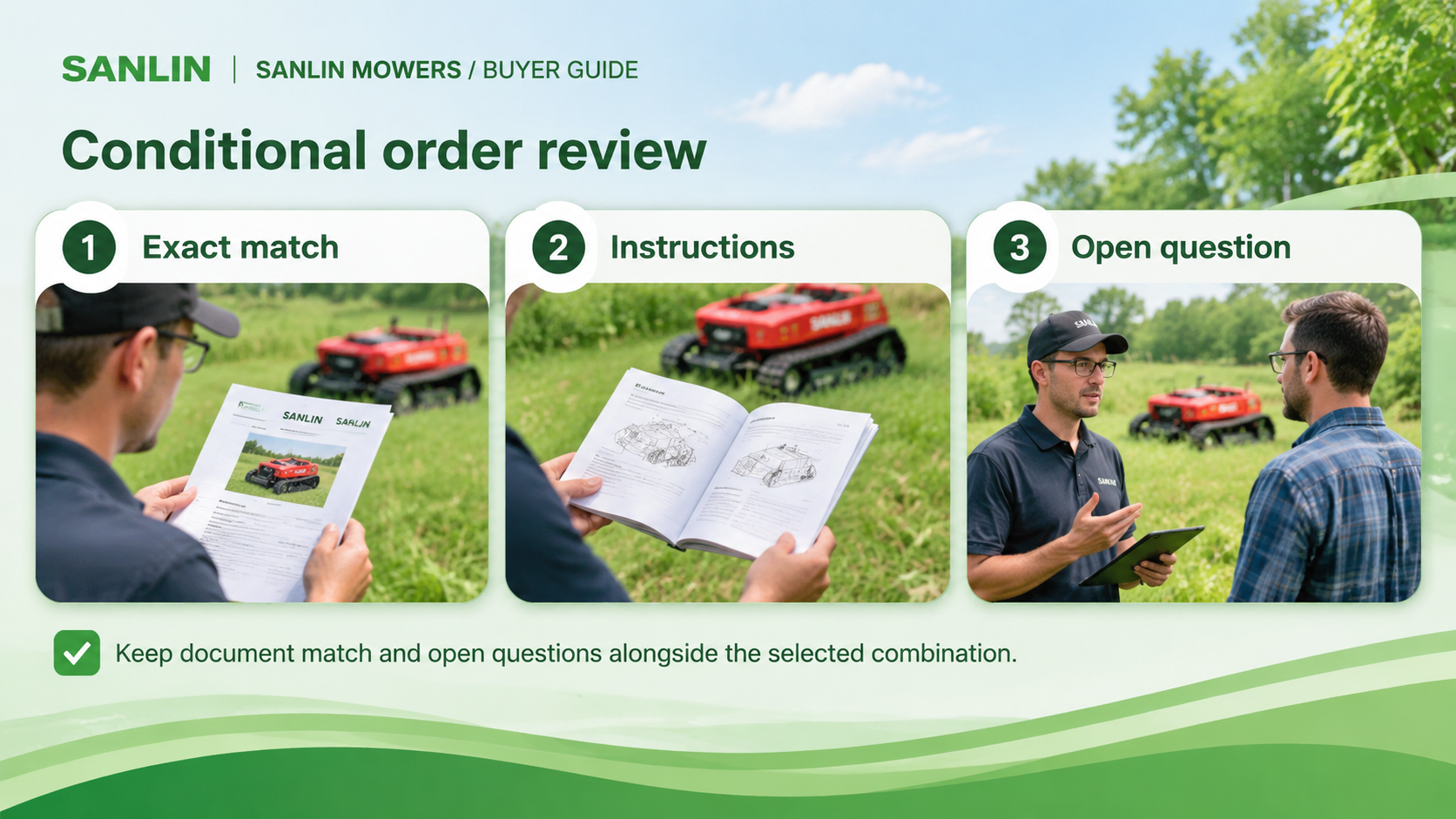
Keep document match and open questions alongside the selected combination.
Next step for your project
Considering an attachment for a mower order? Share the intended task, site conditions, exact mower configuration and proposed accessory so the model match and open documentation questions can be discussed before the order is finalized.