

Define the machine and the receiving team
An operator handover should be planned around a specific machine, not a generic product category. Record the model identifier, proposed configuration, attachments if any, and the version of the instructions that will travel with the unit. Identify the buyer who accepts the machine, the people responsible for site planning, the operators who will receive instruction, and the person who owns maintenance follow-up. A purchasing team may know the commercial terms while the operating team has not yet seen the actual setup. Put those responsibilities on one handover sheet before arranging delivery or a demonstration.
If the project is still selecting a machine, use the public product range to narrow the discussion and label every proposed configuration as provisional. Do not copy operating limits from a related model into the handover sheet. Ask the supplier which instructions and identifiers match the selected machine and who will resolve any mismatch between the order description and the received unit. The first gate is simple: the receiving team should be able to identify what has arrived and which documents apply to it before treating a briefing as complete.
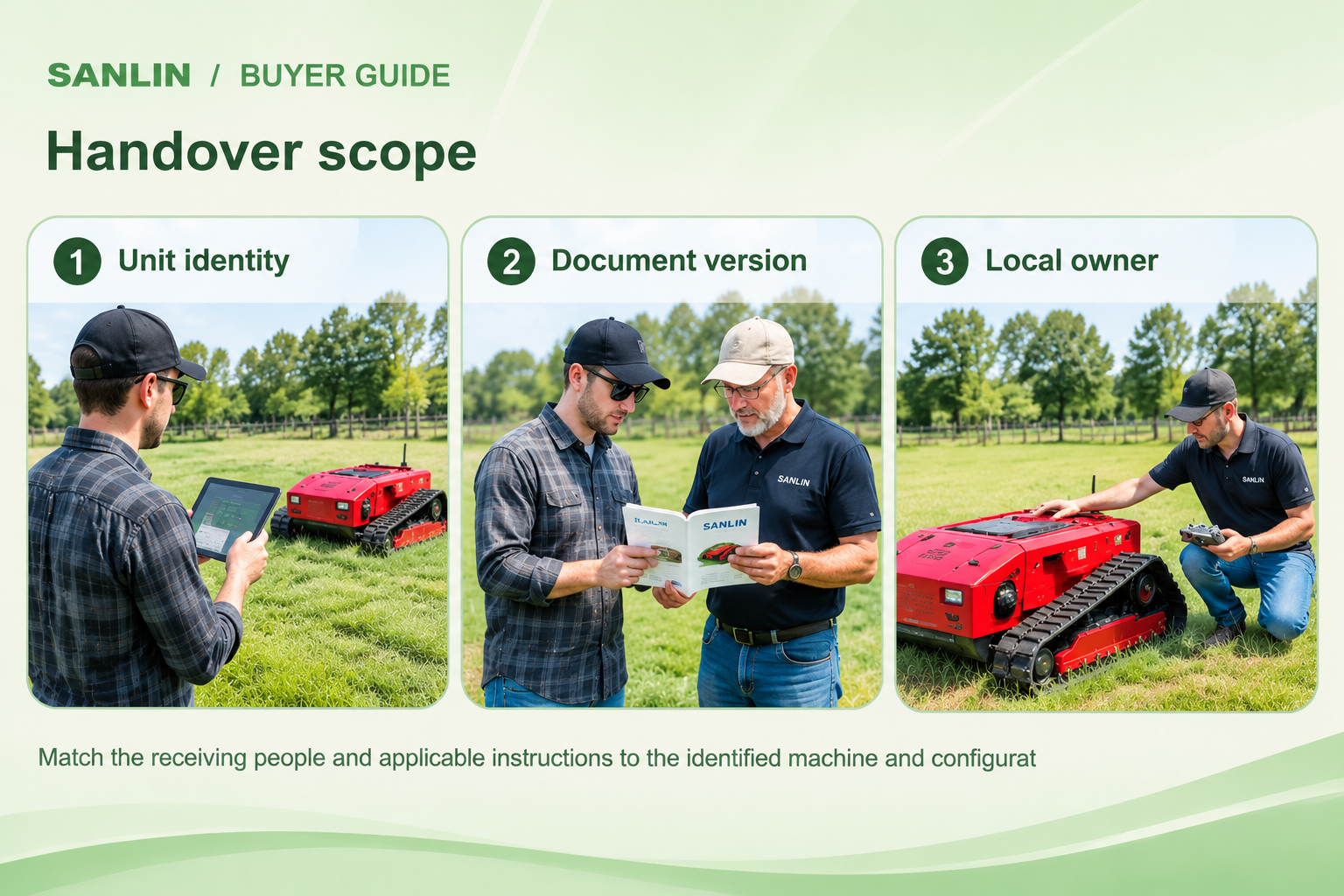
Match the receiving people and applicable instructions to the identified machine and configuration.
Translate the worksite brief into a supervised review
Bring the intended worksite into the handover conversation. Map entry and exit routes, vegetation, surface changes, edges, obstacles, nearby people and areas where the operator's view may be limited. These observations are buyer inputs for the responsible site team, not a claim that a particular mower can handle them. Compare the proposed setup and applicable instructions against this map. If the worksite has not been inspected, record that limitation and avoid presenting the handover as permission to start work there. The receiving organization must make its own site and operating decisions.
Use the buyer guide on remote-control tracked mower selection to structure questions about application, configuration, documentation and service. Ask the supplier to identify the instructions and operating boundaries for the exact unit, then have the site team decide which areas require further review. A controlled trial, if appropriate, should follow the applicable instructions and local procedures, with a clear stop point for uncertainty. The handover record should say what was discussed, what was observed on the site, and what remains open; it should not substitute a broad promotional slope or performance statement for a site-specific assessment.
Give operators a usable information path
Decide where the correct instructions will be stored and how an operator will find them when the machine is in use. The handover agenda can point to the relevant sections for setup checks, controls, operating boundaries, stopping, cleaning and routine maintenance, but the actual instructions must come from the applicable model documentation. Ask operators to show where they would find an answer rather than only signing an attendance sheet. If a question cannot be answered from the supplied material, assign an owner and keep that question open until the relevant party responds.
The receiving team should also know who handles a damaged or missing document, a configuration difference, or a service question. Record one contact route for supplier questions and one local owner for machine records. Do not imply that a supplier has committed to a particular response time or repair arrangement unless that has been agreed for the order. A good information path makes uncertainty visible early: it tells a new operator which machine record to consult and which activity to pause when the available instruction does not cover the condition encountered.
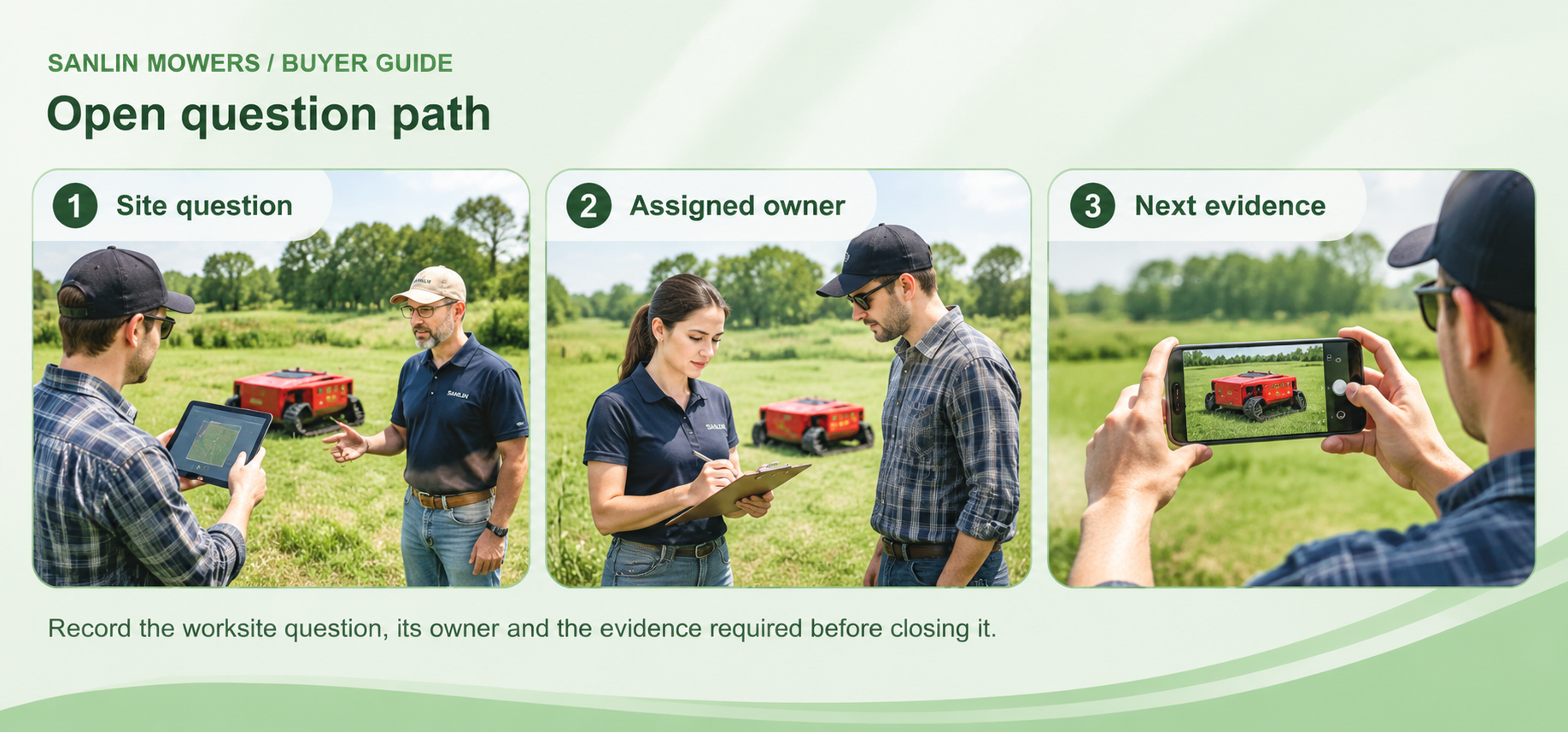
Record the worksite question, its owner and the evidence required before closing it.
Close with evidence, exceptions and a follow-up owner
End the session with a concise record: unit identifier, configuration checked, document version, people present, site assumptions, questions answered and exceptions still open. Separate what the operator saw on the machine from what the supplier stated and from what the site team has yet to decide. That separation is useful when a unit is moved to another site or a new employee joins later. A photograph of an identification label may help local records, but it does not resolve a missing instruction or confirm that a different configuration is equivalent.
Agree who will update the handover record after the first operating review and who will brief anyone who did not attend. Reopen it when the machine, attachment, worksite or operating team changes. The outcome is a traceable transfer of information and responsibility for the selected unit, with unresolved matters assigned for follow-up. It is not a certificate of competence or a promise of suitability for every condition. Buyers can use the resulting questions in a model-specific enquiry before committing to the final handover scope.
Next step for your project
Preparing a handover for a commercial remote mower? Share the intended site, candidate model and configuration, receiving team and open documentation questions so the discussion can focus on the information needed for that specific unit.