
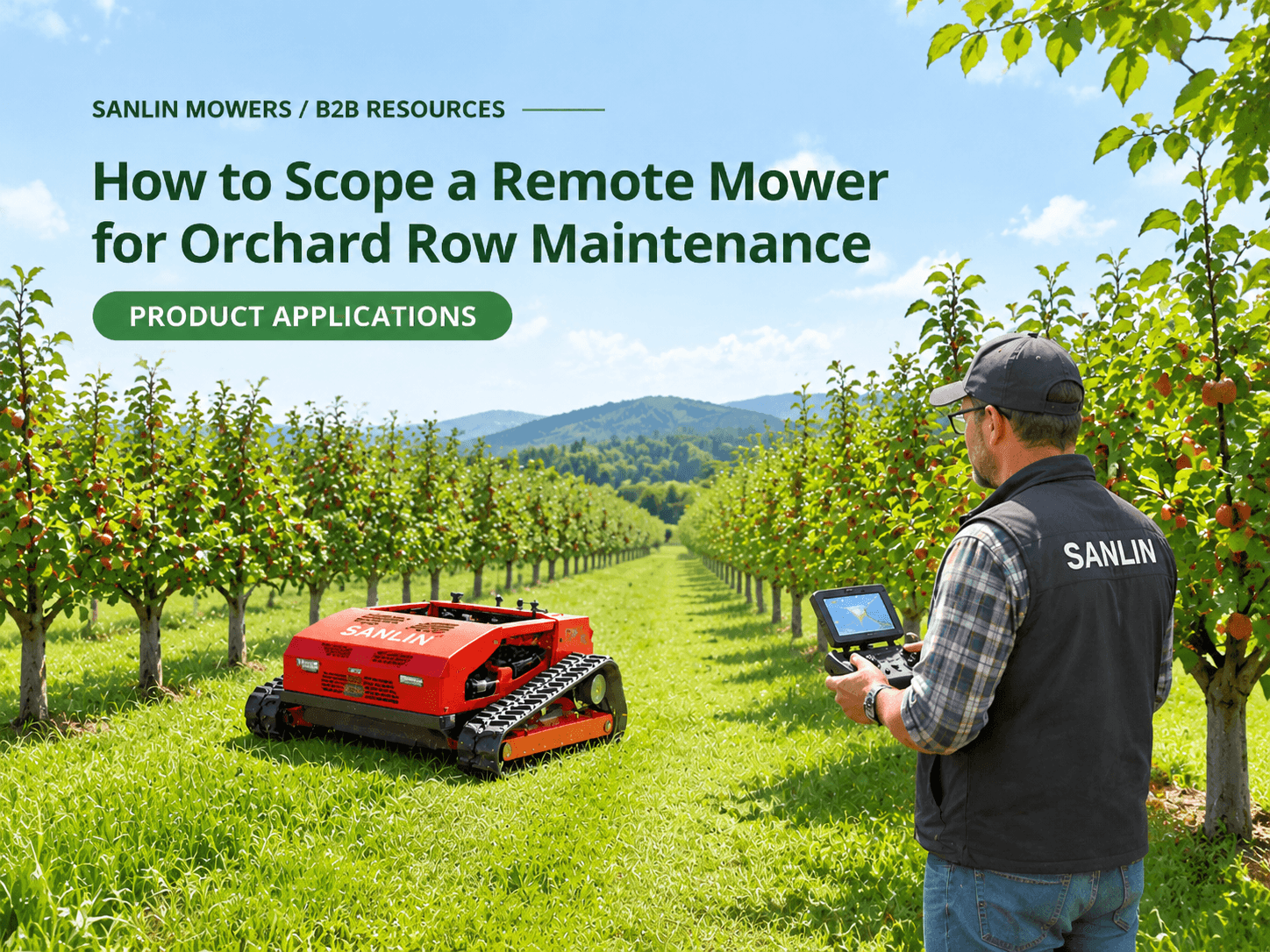
Describe the orchard task and the row layout
An orchard mower inquiry should begin with the actual maintenance task. Identify whether the work concerns grass within the rows, vegetation between rows, headlands, or a combination of areas. Record the vegetation present, the desired finish, how often the work is expected, and who currently performs it. A request described only as "orchard mowing" may hide several different jobs and access conditions. Keep a map or marked photographs with the brief so the buyer and supplier can discuss the same work areas without assuming that one machine configuration fits the entire property.
Next, measure or document the narrowest access points, turns, gates, tree spacing, irrigation equipment, and places where the ground changes. The public product range is a starting place for choosing which machine category to ask about, but a catalog listing cannot establish clearance or suitability at a specific orchard. If dimensions have not yet been measured, mark the layout question as open. A buyer should be able to show the route the machine would need to take and the areas that must remain untouched before requesting a recommendation for a specific model.
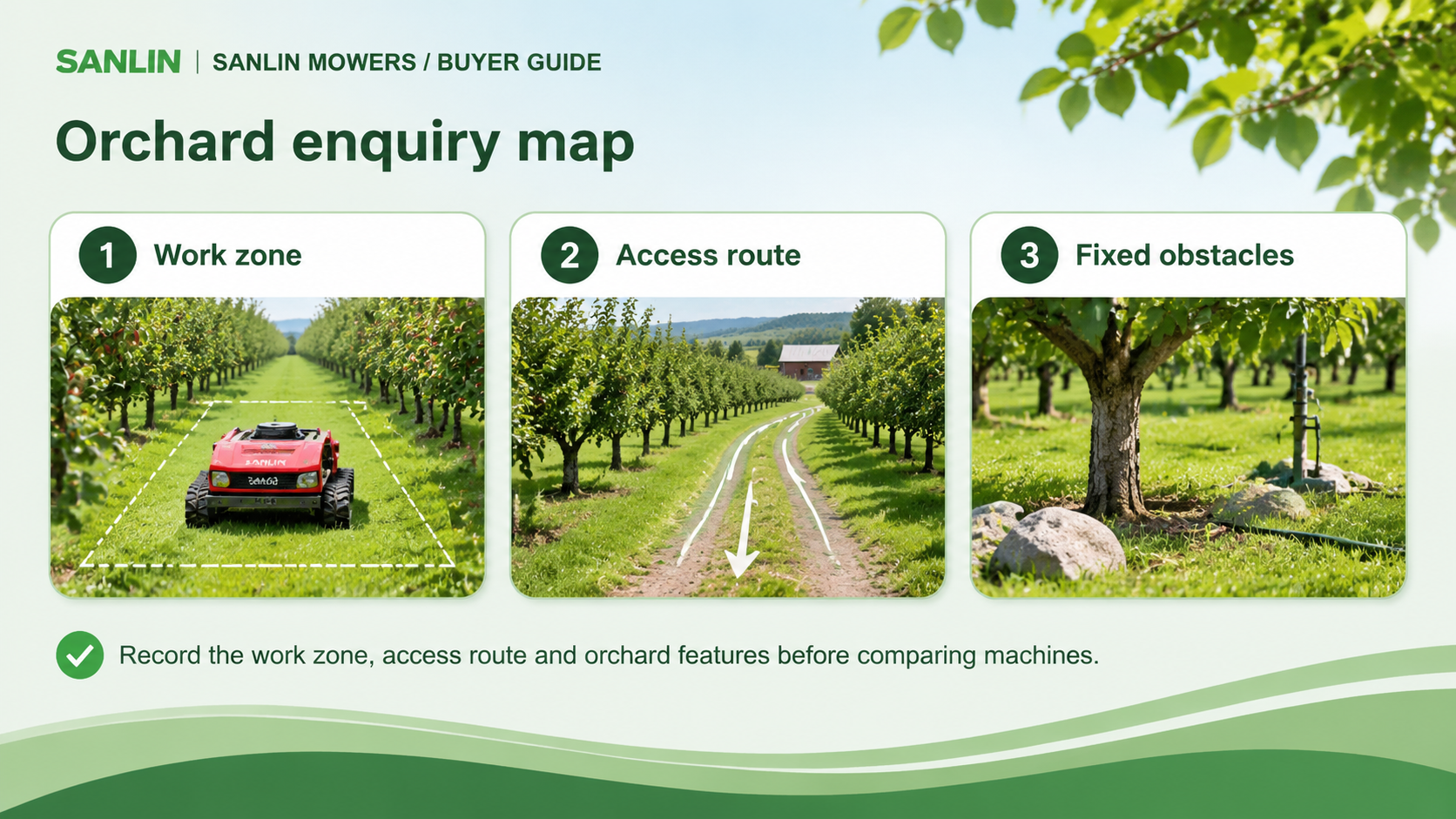
Record the work zone, access route, and orchard features before comparing machines.
Record surface and visibility conditions separately
Orchard rows can contain changing surfaces, low branches, hidden obstacles, drainage features, and edges. Walk the intended route with the responsible site team and record where conditions differ. Note any location where an operator's view of the machine or cutting area might be obstructed. This is not a declaration that remote operation solves those conditions; rather, it provides the information needed to decide whether a particular machine and operating method should be considered at all. Keep site observations separate from manufacturer statements so neither is mistaken for a verified capability.
The buyer guide on remote-control tracked mower selection treats orchards as a possible application to discuss, subject to the selected model, operating instructions, and site review. Use that boundary when gathering evidence. Ask where the relevant operating instructions address the proposed configuration and what additional site controls the responsible team would need to assess. Do not select a mower solely from a broad slope rating or a demonstration on another surface. If visibility, recovery access, or safe separation cannot be resolved for an area, leave it outside the proposed trial scope until the site team has a workable plan.
Compare one defined work zone before scaling the plan
Choose a representative zone that includes the task and access limits the orchard team cares about. Document its entry route, vegetation, obstacles, nearby personnel, and the result the buyer wants to evaluate. Ask for the exact proposed model and cutting configuration, then compare the applicable instructions with that defined zone. A controlled trial may help answer specific questions if the responsible parties judge it appropriate and follow the instructions and local procedures. However, it cannot establish that every row or season will present the same conditions, so avoid treating one pass as an orchard-wide acceptance decision.
Record observations in terms the team can check: whether access was possible under the agreed conditions, which areas were excluded, what finish was observed, and which questions remain. Avoid extrapolating throughput, slope performance, or savings from a short visit. If the selected model or attachment changes, repeat the relevant review rather than transferring the conclusion automatically. This gives the buyer a useful comparison with the existing maintenance method while preserving the limits of the evidence. The supplier can then respond to a specific application rather than an abstract request for the "best orchard mower."
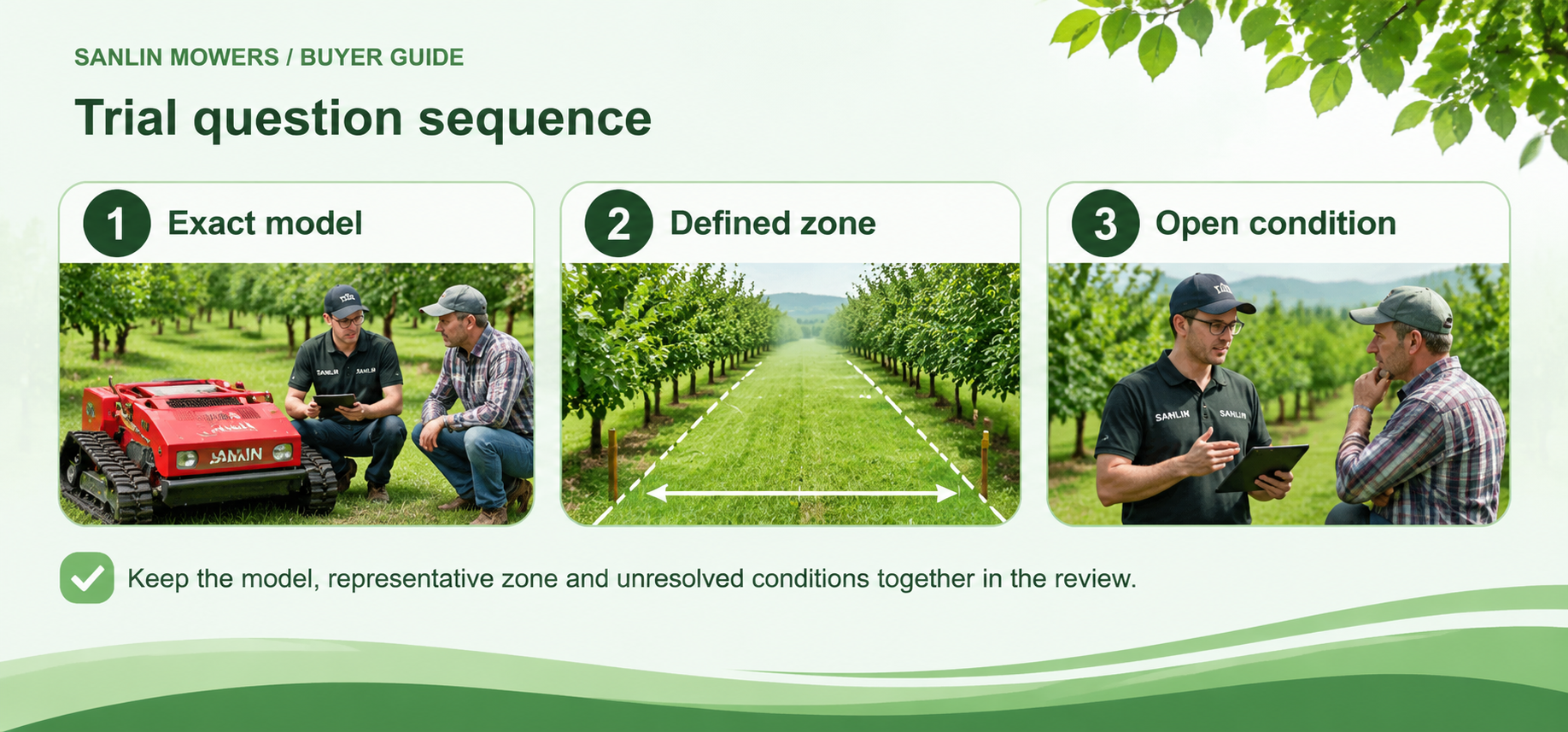
Keep the model, representative zone, and unresolved conditions together in the review.
Include service and order questions in the orchard brief
Before requesting a commercial proposal, list the destination market, expected number of machines, proposed configuration, and the personnel who would operate and maintain them. Ask for the model-specific instructions, routine maintenance information, relevant parts identifiers, and a contact route for technical questions. The orchard team should decide which tasks it can handle locally and which require qualified support. Do not infer a service promise or document scope from a generic catalog. Mark every open item beside the particular model and work zone it affects so the response can be checked later against the proposed order.
A useful conclusion is a bounded inquiry: these rows and tasks are in scope, these site conditions require review, this configuration is being considered, and these questions must be answered before a trial or order decision. It does not claim that an orchard is automatically suitable for any remote mower. The same framework can be reused for another orchard only after its layout and conditions have been recorded. That is how a buyer turns a broad application idea into a model-specific conversation that the site, purchasing, and service teams can all evaluate.
Next step for your project
Planning orchard row maintenance with a remote mower? Share the row layout, access limits, vegetation, proposed work zone, and destination market so the model-specific questions can be reviewed before a trial or order decision.Discuss an orchard mower inquiry